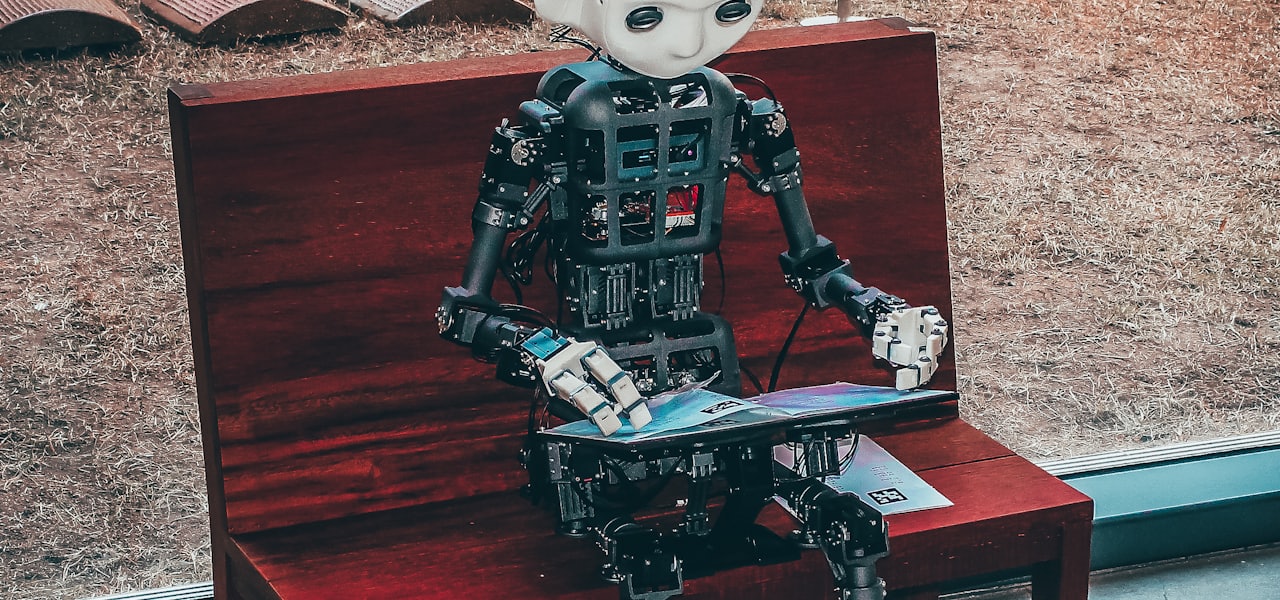
Boris Gershevich Katz (Russian: Борис Гершевич Кац; born October 5, 1947) is a principal American research scientist (computer scientist) at the MIT Computer Science and Artificial Intelligence Laboratory at the Massachusetts Institute of Technology in Cambridge and head of the Laboratory's InfoLab Group. His research interests include natural language processing and understanding, machine learning and intelligent information access. His brother Victor Kac is a mathematician at MIT. He was able to get out of the USSR with the help of U.S. Senator Ted Kennedy, before the end of the Cold War. Over the last several decades, Boris Katz has been developing the START natural language system that allows the user to access various types of information using English. == Biography == Boris Katz was born on October 5, 1947, in Chișinău in the family of Hersh Katz (died 1976) and Hayki (Klara) Landman (born 1921, Lipcani, Briceni District - died 2006, Cambridge, Middlesex County), who moved from Lipcani, a town located in the northern Bessarabian, to Chișinău before the war. He graduated from Moscow State University and in November 1978, he left for the United States thanks to the personal intervention of Senator Edward M. Kennedy. He defended his thesis as a candidate of physical and mathematical sciences in 1975 under the supervision of Evgenii M. Landis. He currently lives in Boston and heads the InfoLabresearch team at the Laboratory of Informatics and Artificial Intelligence at the Massachusetts Institute of Technology. Boris Katz is the creator of the START information processing system (since 1993 - on the Internet), the author of several works in the field of processing, generation and perception of natural languages, machine learning, and accelerated access to multimedia information. == Family == Brothers - Victor Gershevich Katz, American mathematician, professor at the Massachusetts Institute of Technology; Mikhail Gershevich Katz, Israeli mathematician, graduate of Harvard and Columbia (Ph.D., 1984) universities, professor at Bar-Ilan University, author of the monograph "Systolic Geometry and Topology" (Mathematical Surveys and Monographs, vol. 137. American Mathematical Society: Providence, 2007). Daughter - Luba Katz, a bioinformatics scientist (her husband is Alan Jasanoff, a neuroimaging scientist, a professor at MIT, the son of Harvard University professors Jay Jasanoff and Sheila Jasanoff). == Past works == A Knowledge Entry System for Subject Matter Experts: The goal of SHAKEN project is to enable subject matter experts, without any assistance from AI technologists, to assemble the models of processes and mechanisms so that questions about them can be answered by declarative inference and simulation. Exploiting lexical regularities in designing natural language systems Word sense disambiguation for information retrieval HIKE (HPKB integrated knowledge environment)- a query interface and integrated knowledge environment for HPKB Quantitative evaluation of passage retrieval algorithms for question answering Sticky notes for the semantic web Question answering from the web using knowledge annotation and knowledge mining techniques The role of context in question answering systems
Bottlenose (company)
Bottlenose.com, also known as Bottlenose, is an enterprise trend intelligence company that analyzes big data and business data to detect trends for brands. It helps Fortune 500 enterprises discover, and track emerging trends that affect their brands. The company uses natural language processing, sentiment analysis, statistical algorithms, data mining, and machine learning heuristics to determine trends, and has a search engine that gathers information from social networks. KPMG Capital has invested a "substantial amount" in the company. Bottlenose processed 72 billion messages per day, in real-time, from across social and broadcast media, as of December 2014. == History == The company is based in Los Angeles, CA. Bottlenose is a real-time trend intelligence tool that measures social media campaigns and trends. The company also provides a free version of its Sonar tool that shows real-time trends across social media. In October 2012, the company received $1 million of funding from ff Venture Capital and Prosper Capital. By 2014, the company raised about $7 million in funding. In December 2014, KPMG Capital announced further investment in the company. In February 2015, the company confirmed it had raised $13.4 million in Series B funding led by KPMG Capital. Bottlenose partnered with the nonprofit No Labels during the 2014 State of the Union Address to analyze Twitter conversations for bipartisanship. The company also partnered with media monitoring company Critical Mention to analyze broadcast analytics. The Bottlenose Nerve Center integrated with the Critical Mention API to analyze real-time trends in television and radio broadcasts. In June 2014, Bottlenose updated its trend detection product to Nerve Center 2.0. It creates a newsfeed to show changes in trends and sends alerts when trends occur. It also has "emotion detection," which will display the emotions associated with specific comments on trending topics. In 2016, Bottlenose released its Nerve Center 3.0 platform, which was designed to automate the work of data scientists and lower the cost of artificial intelligence for businesses.
Bruno Zamborlin
Bruno Zamborlin (born 1983 in Vicenza) is an AI researcher, entrepreneur and artist based in London, working in the field of human-computer interaction. His work focuses on converting physical objects into touch-sensitive, interactive surfaces using vibration sensors and artificial intelligence. In 2013, he founded Mogees Limited a start-up to transform everyday objects into musical instruments and games using a vibration sensor and a mobile phone. With HyperSurfaces, he converts physical surfaces of any material, shape and form into data-enabled-interactive surfaces using a vibration sensor and a coin-sized chipset. As an artist, he has created art installations around the world, with his most recent work comprising a unique series of "sound furnitures" that was showcased at the Italian Pavilion of the Venice Biennale 2023. He regularly performed with UK-based electronic music duo Plaid (Warp Records). He is also honorary visiting research fellow at Goldsmiths, University of London. == Early life and education == From 2008-2011, Zamborlin worked at the IRCAM (Institute for Research and Coordination Acoustic Musical) – Centre Pompidou as a member of the Sound Music Movement Interaction team. Under the supervision of Frederic Bevilacqua, he started experimenting with the use of artificial intelligence and human movements, and contributed to the creation of Gesture Follower, a software used to analyse body movements of performers and dancers through motion sensors in order to control sound and visual media in real-time, slowing down or speeding up their reproduction based on the speed the gestures are performed. He has lived in London since 2011, where he developed a joint PhD between Goldsmiths, University of London and IRCAM - Centre Pompidou/Pierre and Marie Curie University Paris in AI, focussing on the concept of Interactive Machine Learning applied to digital musical instruments and performing arts. == Career == Zamborlin founded Mogees Limited in 2013 in London, with IRCAM being amongst the early partners. Mogees transform physical objects into musical instruments and games using a vibration sensor and a series of apps for smartphones and desktop. After a campaign on Kickstarter in 2014, Mogees was used both by common users and artists such as Rodrigo y Gabriela, Jean-Michel Jarre and Plaid. The algorithms implemented in these apps employ a special version of physical modelling sound synthesis, where the vibration produced by users when interacting with the physical object are used as exciter for a digital resonator which runs in the app. The result is a hybrid, half acoustic and half digital sound which is a function of both software and acoustic properties of the physical object the users decide to play. In 2017, Zamborlin founded HyperSurfaces together with computational artist Parag K Mital. to merge "the physical and the digital worlds". HyperSurfaces technology converts any surface made of any material, shape and size into data-enabled interactive objects, employing a vibration sensor and proprietary AI algorithms running on a coin-sized chipset. The vibrations generated by people's interactions on the surface are converted into an electric signal by a piezoelectric sensor and analysed in realtime by AI algorithms that run on the chipset. Anytime the AI recognises in the vibration signal one of the events that have been predefined by the user beforehand, a corresponding notification message is generated in realtime and sent to some application. The technology can be applied to anything ranging from button-less human-computer interaction applications for automotive and smart home to the Internet of things. Because the AI algorithms employed by HyperSurfaces run locally on a chipset, without the need to access cloud-based services, they are considered to be part of the field of edge computing. Also, because the AI can be trained beforehand to recognise the events its users are interested in, HyperSurfaces algorithms belong to the field of supervised machine learning. == Selected awards == IRISA Prix Jeune Chercheur, 13 October 2012 NeMoDe, New Economic Models in the Digital Economy, 25 October 2012 == Patents and academic publications == United States pending US10817798B2, Bruno Zamborlin & Carmine Emanuele Cella, "Method to recognize a gesture and corresponding device", published 27 April 2016, assigned to Mogees Limited GB Pending WO/2019/086862, Bruno Zamborlin; Conor Barry & Alessandro Saccoia et al., "A user interface for vehicles", published 9 May 2019, assigned to Mogees Limited GB Pending WO/2019/086863, Bruno Zamborlin; Conor Barry & Alessandro Saccoia et al., "Trigger for game events", published 9 May 2019, assigned to Mogees Limited Bevilacqua, Frédéric; Zamborlin, Bruno; Sypniewski, Anthony; Schnell, Norbert; Guédy, Fabrice; Rasamimanana, Nicolas (2010). "Continuous Realtime Gesture Following and Recognition". Gesture in Embodied Communication and Human-Computer Interaction. Lecture Notes in Computer Science. Vol. 5934. pp. 73–84. doi:10.1007/978-3-642-12553-9_7. ISBN 978-3-642-12552-2. S2CID 16251822. Retrieved 17 January 2021. Rasamimanana, Nicolas; Bevilacqua, Frédéric; Schnell, Norbert; Guédy, Fabrice; Flety, Emmanuel; Maestracci, Come; Zamborlin, Bruno (January 2010). "Modular musical objects towards embodied control of digital music". Proceedings of the fifth international conference on Tangible, embedded, and embodied interaction. Tei '11. pp. 9–12. doi:10.1145/1935701.1935704. ISBN 9781450304788. S2CID 10782645. Retrieved 17 January 2021. Bevilacqua, Frédéric; Schnell, Norbert; Rasamimanana, Nicolas; Zamborlin, Bruno; Guedy, Fabrice (2011). "Online Gesture Analysis and Control of Audio Processing". Musical Robots and Interactive Multimodal Systems. Springer Tracts in Advanced Robotics. Vol. 74. pp. 127–142. doi:10.1007/978-3-642-22291-7_8. ISBN 978-3-642-22290-0. Retrieved 17 January 2021. Zamborlin, Bruno; Bevilacqua, Frédéric; Gillies, Marco; D'Inverno, Mark (15 January 2014). "Fluid gesture interaction design: Applications of continuous recognition for the design of modern gestural interfaces". ACM Transactions on Interactive Intelligent Systems. 3 (4): 22:1–22:30. doi:10.1145/2543921. S2CID 7887245. Retrieved 17 January 2021. Leslie, Grace; Zamborlin, Bruno; Schnell, Norbert; Jodlowski, Pierre (15 June 2010). "A Collaborative, Interactive Sound Installation". Proceedings of the International Computer Music Conference. Retrieved 17 January 2021. Kimura, Mari; Rasamimanana, Nicolas; Bevilacqua, Frédéric; Zamborlin, Bruno; Schnell, Bruno; Flety, Emmanuel (2012). "Extracting Human Expression For Interactive Composition with the Augmented Violin". International Conference on New Interfaces for Musical Expression. Retrieved 17 January 2021. Ferretti, Stefano; Roccetti, Marco; Zamborlin, Bruno (13 January 2009). "On SPAWC: Discussion on a Musical Signal Parser and Well-Formed Composer". 2009 6th IEEE Consumer Communications and Networking Conference. pp. 1–5. doi:10.1109/CCNC.2009.4784966. ISBN 978-1-4244-2308-8. S2CID 14213587. Zamborlin, Bruno; Partesana, Giorgio; Liuni, Marco (15 May 2011). "(LAND)MOVES". Conference on New Interfaces for Musical Expression, NIME: 537–538. Retrieved 17 January 2021.
The Best Free AI Bug Finder for Beginners
Shopping for the best AI bug finder? An AI bug finder is software that uses machine learning to help you get more done — it keeps getting smarter as the underlying models improve. Pricing, accuracy, and the size of the model behind the tool are the three factors that most affect daily usefulness. Whether you are a beginner or a pro, the right AI bug finder slots into your workflow and pays for itself fast. We tested the leading options and ranked them by quality, value, and ease of use.
Best AI Marketing Tools in 2026
Trying to pick the best AI marketing tool? An AI marketing tool is software that uses machine learning to help you get more done — it scales effortlessly from a single task to thousands. The best picks balance beginner-friendly simplicity with the depth power users need, and they ship updates often. Whether you are a beginner or a pro, the right AI marketing tool slots into your workflow and pays for itself fast. Read on for hands-on impressions, pricing tiers, and the standout features that matter.
Vulnerability Discovery Model
A Vulnerability Discovery Model (VDM) uses discovery event data with software reliability models for predicting the same. A thorough presentation of VDM techniques is available in. Numerous model implementations are available in the MCMCBayes open source repository. Several VDM examples include: Alhazmi-Malaiya: Time based model (Alhazmi-Malaiya Logistic (AML) model) Alhazmi-Malaiya: Effort based model Rescorla: Quadratic Model and Exponential Model Anderson: Thermodynamic Model Kim: Weibull Model Linear Model Hump-Shaped Model Independent and Dependent Model Vulnerability Discovery Modeling using Bayesian model averaging Multivariate Vulnerability Discovery Models
Is an AI Art Generator Worth It in 2026?
Curious about the best AI art generator? An AI art generator is software that uses machine learning to help you get more done — it combines speed, accuracy, and an interface that just works. Hands-on testing shows real-world results vary, so a short free trial is the smartest way to decide. Whether you are a beginner or a pro, the right AI art generator slots into your workflow and pays for itself fast. Read on for hands-on impressions, pricing tiers, and the standout features that matter.