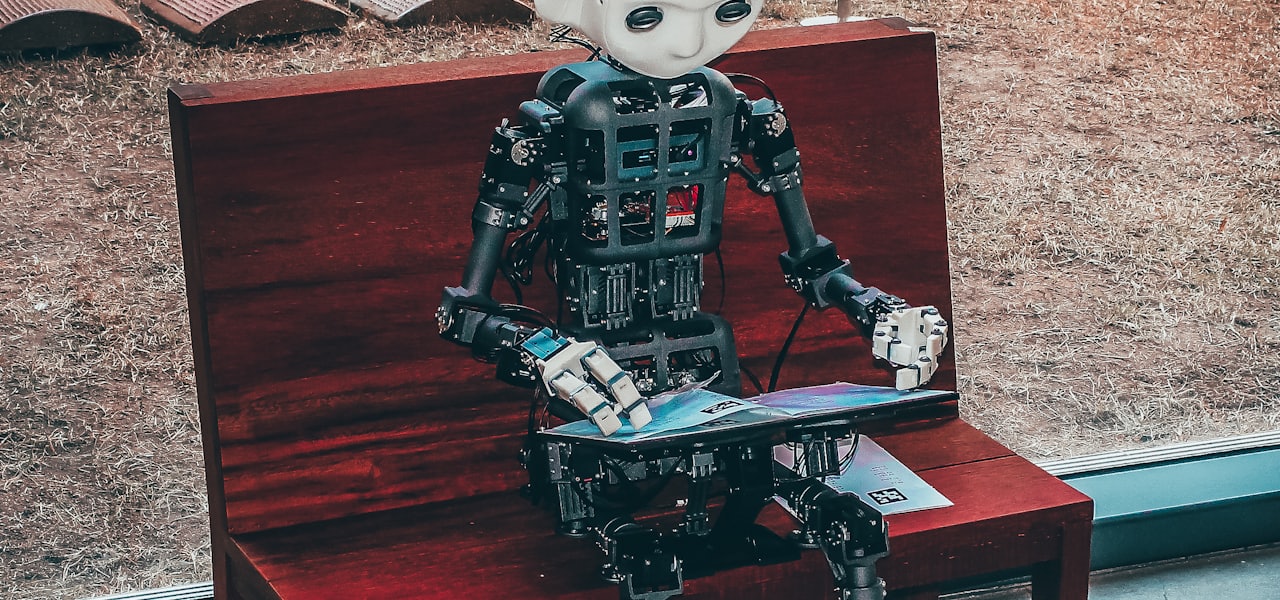
The psychology of reasoning (also known as the cognitive science of reasoning) is the study of how people reason, often broadly defined as the process of drawing conclusions to inform how people solve problems and make decisions. It overlaps with psychology, philosophy, linguistics, cognitive science, artificial intelligence, logic, and probability theory. Psychological experiments on how humans and other animals reason have been carried out for over 100 years. An enduring question is whether or not people have the capacity to be rational. Current research in this area addresses various questions about reasoning, rationality, judgments, intelligence, relationships between emotion and reasoning, and development. == Everyday reasoning == One of the most obvious areas in which people employ reasoning is with sentences in everyday language. Most experimentation on deduction has been carried out on hypothetical thought, in particular, examining how people reason about conditionals, e.g., If A then B. Participants in experiments make the modus ponens inference, given the indicative conditional If A then B, and given the premise A, they conclude B. However, given the indicative conditional and the minor premise for the modus tollens inference, not-B, about half of the participants in experiments conclude not-A and the remainder concludes that nothing follows. The ease with which people make conditional inferences is affected by context, as demonstrated in the well-known selection task developed by Peter Wason. Participants are better able to test a conditional in an ecologically relevant context, e.g., if the envelope is sealed then it must have a 50 cent stamp on it compared to one that contains symbolic content, e.g., if the letter is a vowel then the number is even. Background knowledge can also lead to the suppression of even the simple modus ponens inference Participants given the conditional if Lisa has an essay to write then she studies late in the library and the premise Lisa has an essay to write make the modus ponens inference 'she studies late in the library', but the inference is suppressed when they are also given a second conditional if the library stays open then she studies late in the library. Interpretations of the suppression effect are controversial Other investigations of propositional inference examine how people think about disjunctive alternatives, e.g., A or else B, and how they reason about negation, e.g., It is not the case that A and B. Many experiments have been carried out to examine how people make relational inferences, including comparisons, e.g., A is better than B. Such investigations also concern spatial inferences, e.g. A is in front of B and temporal inferences, e.g. A occurs before B. Other common tasks include categorical syllogisms, used to examine how people reason about quantifiers such as All or Some, e.g., Some of the A are not B. For example if all A are B and some B are C, what (if anything) follows? == Theories of reasoning == There are several alternative theories of the cognitive processes that human reasoning is based on. One view is that people rely on a mental logic consisting of formal (abstract or syntactic) inference rules similar to those developed by logicians in the propositional calculus. Another view is that people rely on domain-specific or content-sensitive rules of inference. A third view is that people rely on mental models, that is, mental representations that correspond to imagined possibilities. A fourth view is that people compute probabilities. One controversial theoretical issue is the identification of an appropriate competence model, or a standard against which to compare human reasoning. Initially classical logic was chosen as a competence model. Subsequently, some researchers opted for non-monotonic logic and Bayesian probability. Research on mental models and reasoning has led to the suggestion that people are rational in principle but err in practice. Connectionist approaches towards reasoning have also been proposed. Despite the ongoing debate about the cognitive processes involved in human reasoning, recent research has shown that multiple approaches can be useful in modeling human thinking. For instance, studies have found that people's reasoning is often influenced by their prior beliefs, which can be modeled using Bayesian probability theory. Additionally, research on mental models has shown that people tend to reason about problems by constructing multiple mental representations of the situation, which can help them to identify relevant features and make inferences based on their understanding of the problem. Moreover, connectionist approaches to reasoning have also gained attention, which focus on the neural network models that can learn from data and generalize to new situations. == Development of reasoning == It is an active question in psychology how, why, and when the ability to reason develops from infancy to adulthood. Jean Piaget's theory of cognitive development posited general mechanisms and stages in the development of reasoning from infancy to adulthood. According to the neo-Piagetian theories of cognitive development, changes in reasoning with development come from increasing working memory capacity, increasing speed of processing, and enhanced executive functions and control. Increasing self-awareness is also an important factor. In their book The Enigma of Reason, the cognitive scientists Hugo Mercier and Dan Sperber put forward an "argumentative" theory of reasoning, claiming that humans evolved to reason primarily to justify our beliefs and actions and to convince others in a social environment. Key evidence for their theory includes the errors in reasoning that solitary individuals are prone to when their arguments are not criticized, such as logical fallacies, and how groups become much better at performing cognitive reasoning tasks when they communicate with one another and can evaluate each other's arguments. Sperber and Mercier offer one attempt to resolve the apparent paradox that the confirmation bias is so strong despite the function of reasoning naively appearing to be to come to veridical conclusions about the world. The study of the development of reasoning abilities is an ongoing area of research in psychology, and multiple factors have been proposed to explain how, why, and when reasoning develops from infancy to adulthood. Recent research has suggested that early experiences and social interactions play a critical role in the development of reasoning abilities. For example, studies have shown that infants as young as six months old can engage in basic logical reasoning, such as reasoning about the relationship between objects and their properties. Furthermore, research has highlighted the importance of parental interaction and cognitive stimulation in the development of children's reasoning abilities. Additionally, studies have suggested that cultural factors, such as educational practices and the emphasis on critical thinking, can also influence the development of reasoning skills across different populations. == Different sorts of reasoning == Philip Johnson-Laird trying to taxonomize thought, distinguished between goal-directed thinking and thinking without goal, noting that association was involved in unrelated reading. He argues that goal directed reasoning can be classified based on the problem space involved in a solution, citing Allen Newell and Herbert A. Simon. Inductive reasoning makes broad generalizations from specific cases or observations. In this process of reasoning, general assertions are made based on past specific pieces of evidence. This kind of reasoning allows the conclusion to be false even if the original statement is true. For example, if one observes a college athlete, one makes predictions and assumptions about other college athletes based on that one observation. Scientists use inductive reasoning to create theories and hypotheses. Philip Johnson-Laird distinguished inductive from deductive reasoning, in that the former creates semantic information while the later does not . In opposition, deductive reasoning is a basic form of valid reasoning. In this reasoning process a person starts with a known claim or a general belief and from there asks what follows from these foundations or how will these premises influence other beliefs. In other words, deduction starts with a hypothesis and examines the possibilities to reach a conclusion. Deduction helps people understand why their predictions are wrong and indicates that their prior knowledge or beliefs are off track. An example of deduction can be seen in the scientific method when testing hypotheses and theories. Although the conclusion usually corresponds and therefore proves the hypothesis, there are some cases where the conclusion is logical, but the generalization is not. For example, the argument, "All young girls wear skirts; Julie is a young
VACUUM
VACUUM is a set of normative guidance principles for achieving training and test dataset quality for structured datasets in data science and machine learning. The garbage-in, garbage out principle motivates a solution to the problem of data quality but does not offer a specific solution. Unlike the majority of the ad-hoc data quality assessment metrics often used by practitioners VACUUM specifies qualitative principles for data quality management and serves as a basis for defining more detailed quantitative metrics of data quality. VACUUM is an acronym that stands for: valid accurate consistent uniform unified model
Margin classifier
In machine learning (ML), a margin classifier is a type of classification model which is able to give an associated distance from the decision boundary for each data sample. For instance, if a linear classifier is used, the distance (typically Euclidean, though others may be used) of a sample from the separating hyperplane is the margin of that sample. The notion of margins is important in several ML classification algorithms, as it can be used to bound the generalization error of these classifiers. These bounds are frequently shown using the VC dimension. The generalization error bound in boosting algorithms and support vector machines is particularly prominent. == Margin for boosting algorithms == The margin for an iterative boosting algorithm given a dataset with two classes can be defined as follows: the classifier is given a sample pair ( x , y ) {\displaystyle (x,y)} , where x ∈ X {\displaystyle x\in X} is a domain space and y ∈ Y = { − 1 , + 1 } {\displaystyle y\in Y=\{-1,+1\}} is the sample's label. The algorithm then selects a classifier h j ∈ C {\displaystyle h_{j}\in C} at each iteration j {\displaystyle j} where C {\displaystyle C} is a space of possible classifiers that predict real values. This hypothesis is then weighted by α j ∈ R {\displaystyle \alpha _{j}\in R} as selected by the boosting algorithm. At iteration t {\displaystyle t} , the margin of a sample x {\displaystyle x} can thus be defined as y ∑ j t α j h j ( x ) ∑ | α j | . {\displaystyle {\frac {y\sum _{j}^{t}\alpha _{j}h_{j}(x)}{\sum |\alpha _{j}|}}.} By this definition, the margin is positive if the sample is labeled correctly, or negative if the sample is labeled incorrectly. This definition may be modified and is not the only way to define the margin for boosting algorithms. However, there are reasons why this definition may be appealing. == Examples of margin-based algorithms == Many classifiers can give an associated margin for each sample. However, only some classifiers utilize information of the margin while learning from a dataset. Many boosting algorithms rely on the notion of a margin to assign weight to samples. If a convex loss is utilized (as in AdaBoost or LogitBoost, for instance) then a sample with a higher margin will receive less (or equal) weight than a sample with a lower margin. This leads the boosting algorithm to focus weight on low-margin samples. In non-convex algorithms (e.g., BrownBoost), the margin still dictates the weighting of a sample, though the weighting is non-monotone with respect to the margin. == Generalization error bounds == One theoretical motivation behind margin classifiers is that their generalization error may be bound by the algorithm parameters and a margin term. An example of such a bound is for the AdaBoost algorithm. Let S {\displaystyle S} be a set of m {\displaystyle m} data points, sampled independently at random from a distribution D {\displaystyle D} . Assume the VC-dimension of the underlying base classifier is d {\displaystyle d} and m ≥ d ≥ 1 {\displaystyle m\geq d\geq 1} . Then, with probability 1 − δ {\displaystyle 1-\delta } , we have the bound: P D ( y ∑ j t α j h j ( x ) ∑ | α j | ≤ 0 ) ≤ P S ( y ∑ j t α j h j ( x ) ∑ | α j | ≤ θ ) + O ( 1 m d log 2 ( m / d ) / θ 2 + log ( 1 / δ ) ) {\displaystyle P_{D}\left({\frac {y\sum _{j}^{t}\alpha _{j}h_{j}(x)}{\sum |\alpha _{j}|}}\leq 0\right)\leq P_{S}\left({\frac {y\sum _{j}^{t}\alpha _{j}h_{j}(x)}{\sum |\alpha _{j}|}}\leq \theta \right)+O\left({\frac {1}{\sqrt {m}}}{\sqrt {d\log ^{2}(m/d)/\theta ^{2}+\log(1/\delta )}}\right)} for all θ > 0 {\displaystyle \theta >0} .
ARKA descriptors in QSAR
In computational chemistry and cheminformatics, ARKA descriptors in QSAR are a class of molecular descriptors used in quantitative structure–activity relationship (QSAR) modeling (or related approaches such as QSPR and QSTR), a computational method for predicting the biological activity or toxicity of chemical compounds based on their molecular structure. Molecular descriptors are numerical values that summarize information about a molecule's structure, topology, geometry, or physicochemical properties in a form suitable for machine learning or statistical modeling. ARKA (Arithmetic Residuals in K-Groups Analysis) descriptors differ from traditional descriptors by encoding atomic-level information through recursive autoregression techniques, which aim to capture subtle structural patterns and improve predictive accuracy. They are designed to be both interpretable and well-suited to modeling nonlinear relationships in QSAR studies. == Comparisons == While QSAR is essentially a similarity-based approach, the occurrence of activity/property cliffs may greatly reduce the predictive accuracy of the developed models. The novel Arithmetic Residuals in K-groups Analysis (ARKA) approach is a supervised dimensionality reduction technique developed by the DTC Laboratory, Jadavpur University that can easily identify activity cliffs in a data set. Activity cliffs are similar in their structures but differ considerably in their activity. The basic idea of the ARKA descriptors is to group the conventional QSAR descriptors based on a predefined criterion and then assign weightage to each descriptor in each group. ARKA descriptors have also been used to develop classification-based and regression-based QSAR models with acceptable quality statistics. The ARKA descriptors have been used for the identification of activity cliffs in QSAR studies and/or model development by multiple researchers. A tutorial presentation on the ARKA descriptors is available. Recently a multi-class ARKA framework has been proposed for improved q-RASAR model generation.
UIMA
UIMA ( yoo-EE-mə), short for Unstructured Information Management Architecture, is an OASIS standard for content analytics, originally developed at IBM. It provides a component software architecture for the development, discovery, composition, and deployment of multi-modal analytics for the analysis of unstructured information and integration with search technologies. == Structure == The UIMA architecture can be thought of in four dimensions: It specifies component interfaces in an analytics pipeline. It describes a set of design patterns. It suggests two data representations: an in-memory representation of annotations for high-performance analytics and an XML representation of annotations for integration with remote web services. It suggests development roles allowing tools to be used by users with diverse skills. == Implementations and uses == Apache UIMA, a reference implementation of UIMA, is maintained by the Apache Software Foundation. UIMA is used in a number of software projects: IBM Research's Watson uses UIMA for analyzing unstructured data. The Clinical Text Analysis and Knowledge Extraction System (Apache cTAKES) is a UIMA-based system for information extraction from medical records. DKPro Core is a collection of reusable UIMA components for general-purpose natural language processing.
AI agent
In the context of generative artificial intelligence, AI agents (also referred to as compound AI systems or agentic AI) are a class of intelligent agents that can pursue goals, use tools, and take actions with varying degrees of autonomy. In practice, they usually operate within human-defined objectives, constraints, and available tools. == Overview == AI agents possess several key attributes, including goal-directed behavior, natural language interfaces, the capacity to use external tools, and the ability to perform multi-step tasks. Their control flow is frequently driven by large language models (LLMs). Agent systems may also include memory components, planning logic, tool interfaces, and orchestration software for coordinating agent components. AI agents do not have a standard definition. NIST describes agentic AI as an emerging area requiring standards for secure operation, interoperability, and reliable interaction with external systems. A common application of AI agents is task automation: for example, booking travel plans based on a user's prompted request. Companies such as Google, Microsoft and Amazon Web Services have offered platforms for deploying pre-built AI agents. Several protocols have been proposed for standardizing inter-agent communication, with examples including the Model Context Protocol, Gibberlink, and many others. Some of these protocols are also used for connecting agents to external applications. In December 2025, Linux Foundation announced the formation of the Agentic AI Foundation (AAIF), with the goal of ensuring agentic AI evolves transparently and collaboratively. == History == AI agents have been traced back to research from the 1990s, with Harvard professor Milind Tambe noting that the definition of an AI agent was not clear at the time. Researcher Andrew Ng has been credited with spreading the term "agentic" to a wider audience in 2024. == Training and testing == Researchers have attempted to build world models and reinforcement learning environments to train or evaluate AI agents. For example, video games such as Minecraft and No Man's Sky as well as replicas of company websites, have also been used for training such agents. == Autonomous capabilities == The Financial Times compared the autonomy of AI agents to the SAE classification of self-driving cars, likening most applications to level 2 or level 3, with some achieving level 4 in highly specialized circumstances, and level 5 being theoretical. == Cognitive architecture == The following are some internal design options for reasoning within an agent: Retrieval-augmented generation ReAct (Reason + Act) pattern is an iterative process in which an AI agent alternates between reasoning and taking actions, receives observations from the environment or external tools, and integrates these observations into subsequent reasoning steps. Reflexion, which uses an LLM to create feedback on the agent's plan of action and stores that feedback in a memory cache. A tool/agent registry, for organizing software functions or other agents that the agent can use. One-shot model querying, which queries the model once to create the plan of action. === Reference architecture === Ken Huang proposed an AI agent reference architecture, which consists of seven interconnected layers, with each layer building on the functionality of the layers beneath it: Layer 1: Foundation models - provide the core AI engines to power agent capabilities. Layer 2: Data operations - manage the complex data infrastructure required for AI agent operations, including Vector database, data loaders, RAG. Layer 3: Agent frameworks - sophisticated software and tools that simplify the development and management of the AI agents. Layer 4: Deployment and infrastructure - provide the robust technical foundation for running AI agents. Layer 5: Evaluation and observability - focus on assessing the safety and performance of AI agents. Layer 6: Security and compliance - a crucial protective framework ensuring AI agents operate safely, securely, and conform to regulatory boundaries. At this layer security and compliance features embedded into all the AI agent stack layers are integrated together. Layer 7: Agent ecosystem - represents the AI agents' interface with real-world applications and users. == Orchestration patterns == To execute complex tasks, autonomous agents are often integrated with other agents or specialized tools. These configurations, known as orchestration patterns or workflows, include the following: Prompt chaining: A sequence where the output of one step serves as the input for the next. Routing: The classification of an input to direct it to a specialized downstream task or tool. Parallelization: The simultaneous execution of multiple tasks. Sequential processing: A fixed, linear progression of tasks through a predefined pipeline. Planner-critic: An iterative pattern where one agent generates a proposal and another evaluates it to provide feedback for refinement. == Multimodal AI agents == In addition to large language models (LLMs), vision-language models (VLMs) and multimodal foundation models can be used as the basis for agents. In September 2024, Allen Institute for AI released an open-source vision-language model. Nvidia released a framework for developers to use VLMs, LLMs and retrieval-augmented generation for building AI agents that can analyze images and videos, including video search and video summarization. Microsoft released a multimodal agent model – trained on images, video, software user interface interactions, and robotics data – that the company claimed can manipulate software and robots. == Applications == As of April 2025, per the Associated Press, there are few real-world applications of AI agents. As of June 2025, per Fortune, many companies are primarily experimenting with AI agents. The Information divided AI agents into seven archetypes: business-task agents, for acting within enterprise software; conversational agents, which act as chatbots for customer support; research agents, for querying and analyzing information (such as OpenAI Deep Research); analytics agents, for analyzing data to create reports; software developer or coding agents (such as Cursor); domain-specific agents, which include specific subject matter knowledge; and web browser agents (such as OpenAI Operator). By mid-2025, AI agents have been used in video game development, gambling (including sports betting), cryptocurrency wallets (including cryptocurrency trading and meme coins) and social media. In August 2025, New York Magazine described software development as the most definitive use case of AI agents. Likewise, by October 2025, noting a decline in expectations, The Information noted AI coding agents and customer support as the primary use cases by businesses. In November 2025, The Wall Street Journal reported that few companies that deployed AI agents have received a return on investment. === Applications in government === Several government bodies in the United States and United Kingdom have deployed or announced the deployment of agents, at the local and national level. The city of Kyle, Texas deployed an AI agent from Salesforce in March 2025 for 311 customer service. In November 2025, the Internal Revenue Service stated that it would use Agentforce, AI agents from Salesforce, for the Office of Chief Counsel, Taxpayer Advocate Services and the Office of Appeals. That same month, Staffordshire Police announced that they would trial Agentforce agents for handling non-emergency 101 calls in the United Kingdom starting in 2026. In December 2025, the Department of Neighborhoods in Detroit, Michigan, in partnership with a local business, deployed a pilot project in two Detroit districts for an AI agent to be used for customer service calls. In February 2025, Thomas Shedd, the director of the Technology Transformation Services, proposed using AI coding agents across the United States federal government. A recruiter for the Department of Government Efficiency proposed in April 2025 to use AI agents to automate the work of about 70,000 United States federal government employees, as part of a startup with funding from OpenAI and a partnership agreement with Palantir. This proposal was criticized by experts for its impracticality, if not impossibility, and the lack of corresponding widespread adoption by businesses. In December 2025, the Food and Drug Administration announced that it would offer "agentic AI capabilities" to its staff for "meeting management, pre-market reviews, review validation, post-market surveillance, inspections and compliance and administrative functions." That same month, the United States Department of Defense launched GenAI.mil, an internal platform for American military personnel to use generative AI-based applications based on Google Gemini, including "intelligent agentic workflows". Defense Secretary Pete Hegseth listed applications such as "[conducting] deep r
Generalized blockmodeling of binary networks
Generalized blockmodeling of binary networks (also relational blockmodeling) is an approach of generalized blockmodeling, analysing the binary network(s). As most network analyses deal with binary networks, this approach is also considered as the fundamental approach of blockmodeling. This is especially noted, as the set of ideal blocks, when used for interpretation of blockmodels, have binary link patterns, which precludes them to be compared with valued empirical blocks. When analysing the binary networks, the criterion function is measuring block inconsistencies, while also reporting the possible errors. The ideal block in binary blockmodeling has only three types of conditions: "a certain cell must be (at least) 1, a certain cell must be 0 and the f {\displaystyle f} over each row (or column) must be at least 1". It is also used as a basis for developing the generalized blockmodeling of valued networks.